ARE COWS MORE VALUABLE THAN HUMANS IN NIGERIA? WHAT IS THE VALUE OF LIFE IN A NATION IN CRISIS — HOW MANY MORE MUST DIE?
By Daniel Okonkwo
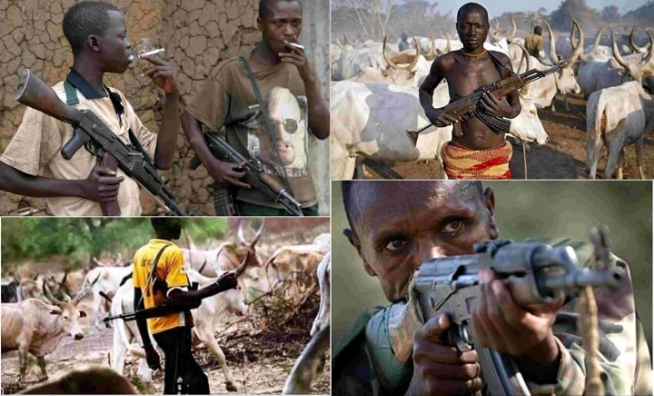
In recent years, the value of human life in Nigeria has come under intense scrutiny, particularly due to the relentless attacks on farming communities, primarily in the Middle Belt and North-Central regions. The haunting question that continues to echo across local and international discourse is: Are cows more valuable than human beings in Nigeria? This question becomes even more unsettling when viewed through the lens of recurring, unprovoked attacks by armed herdsmen—mostly identified as Fulani militants—on rural communities.
Headlines consistently portray the devastating impact of these attacks: “At least 21 killed in Nigeria after herdsmen attack villagers,” “At least 140 villagers killed by suspected herders,” and “On April 12, 2022, armed herdsmen attacked several villages in Benue State, killing over 25 people and injuring many more.” The pattern is disturbingly consistent—defenseless villagers are targeted, killed, and displaced, often without any meaningful intervention from the government.
The spate of killings in states such as Ondo, Benue, Edo, Nasarawa, Enugu, Ebonyi, Imo, Delta, Abia, and Plateau has reached a critical level. Yet, calls for decisive federal government action—such as banning open grazing and enforcing ranching policies—continue to fall on deaf ears. The conflict, while fundamentally about land use between nomadic Fulani herdsmen and sedentary farmers, has taken on dangerous religious and ethnic dimensions. The majority of the herdsmen are Muslim Fulani, while most of the farming communities are Christian and ethnically diverse. Since Nigeria’s return to democracy in 1999, the Middle Belt has become a hotbed of these violent clashes, which have escalated into what many now call ethnic and religious cleansing.
These attacks are not limited to the Middle Belt. In Northwestern Nigeria, where both herders and farmers are predominantly Muslim, clashes have still erupted, proving that the conflict is complex and complicated. Nonetheless, Christian communities have borne the brunt of these assaults. Genocide Watch, an international human rights organization, has since 2022 classified these farmer-herder conflicts in Nigeria as a genocide against Christians. According to their report, Nigeria is now at Stage 9 (Extermination) and Stage 10 (Denial) of the Ten Stages of Genocide, as developed by Dr. Gregory Stanton.
The latest in this tragic trend occurred on April 2–3, when Fulani terrorists reportedly attacked several communities in Plateau State, killing more than 60 people. Community leader Maren Aradong recounted that more than 1,000 Christians were displaced in Hurti village alone, and 383 homes were destroyed. “These attacks began on Wednesday, 2 April, at about 3 p.m., when these armed Fulani herdsmen invaded our communities in large numbers; they came on motorcycles and attacked us,” Aradong said. According to Farmasum Fuddang, chairman of the Bokkos Community Development Council (BCDC), seven Christian communities were affected, including Ruwi, Mangor, Tamiso, Daffo, Manguna, Hurti, and Tadai.
The attacks were not just deadly but methodically brutal. In Ruwi village, 11 Christians were murdered during a wake for a deceased community member, and the next morning, 10 more were killed. Plateau State Governor Caleb Mutfwang described these atrocities as “genocide” in a televised interview, stating, “What happened in the last two weeks in Bokkos is genocide—I say it unreservedly.”
Nigeria must not become one of the most dangerous places in the world for Christians. The 2025 World Watch List by Open Doors International confirms that 3,100 of the 4,476 Christians killed globally for their faith were in Nigeria—accounting for 69% of all such deaths. The report states that anti-Christian violence in Nigeria is already at the maximum measurable level. In the North-Central region, Fulani extremists, Boko Haram, ISWAP, and now a new jihadist group known as Lakurawa, continue to terrorize communities with sophisticated weaponry.
Lakurawa, reportedly affiliated with the Al-Qaeda-backed Jama’a Nusrat ul-Islam wa al-Muslimin (JNIM) from Mali, has expanded its terror operations into southern Nigeria. The federal government’s weak response, coupled with poor intelligence, has created a vacuum where impunity thrives. Sexual violence, abductions for ransom, roadblock executions, and the burning of homes and food stores have become tragically common.
Despite widespread suffering, there has been a disturbing lack of accountability. The failure to classify these armed Fulani militants as terrorists—while others like IPOB have been swiftly proscribed—raises serious questions about state complicity or, at best, negligence.
So, the haunting question persists: Are cows more valuable than human lives in Nigeria? When cattle are protected while human beings are slaughtered in their hundreds, when state silence becomes complicity, and when international communities look on without intervention, the answer becomes painfully clear.
Adding to this disturbing reality, the Plateau State Government recently ordered an investigation after 36 cows were killed by poison. The cow poisoning is believed to be a continuation of a tit-for-tat conflict between peasant farmers and cattle herders that has persisted for years. This is unbelievably insane. Is investigating the killing of cows more important than the lives of Plateau people? The governor should prioritize the deaths of his citizens over those of cows that are deliberately directed into people's farms to destroy them. It is a shame how fear has crippled the truth.
Nigeria stands at a crossroads. It must choose to protect all its citizens—regardless of ethnicity, religion, or occupation. The time to act is now. Anything less is a betrayal of the very idea of humanity and justice.
Written by Daniel Okonkwo for Profile International Human Rights Advocate.
 |
| ARE COWS MORE VALUABLE THAN HUMANS IN NIGERIA? WHAT IS THE VALUE OF LIFE IN A NATION IN CRISIS — HOW MANY MORE MUST DIE |
Comments
Post a Comment